Comparison is the thief of joy, so when the first images from the Vera C. Rubin Observatory were uploaded, I was sad. Not really. But I did have the instant thought “I bet I could do that.” (I can’t.)
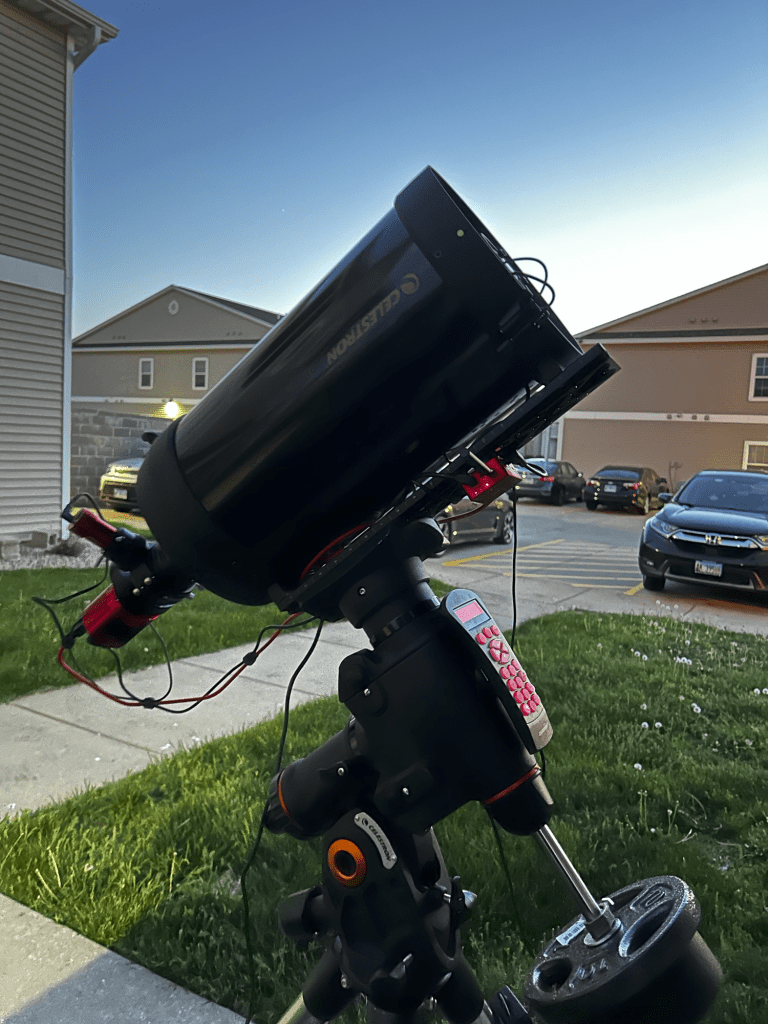
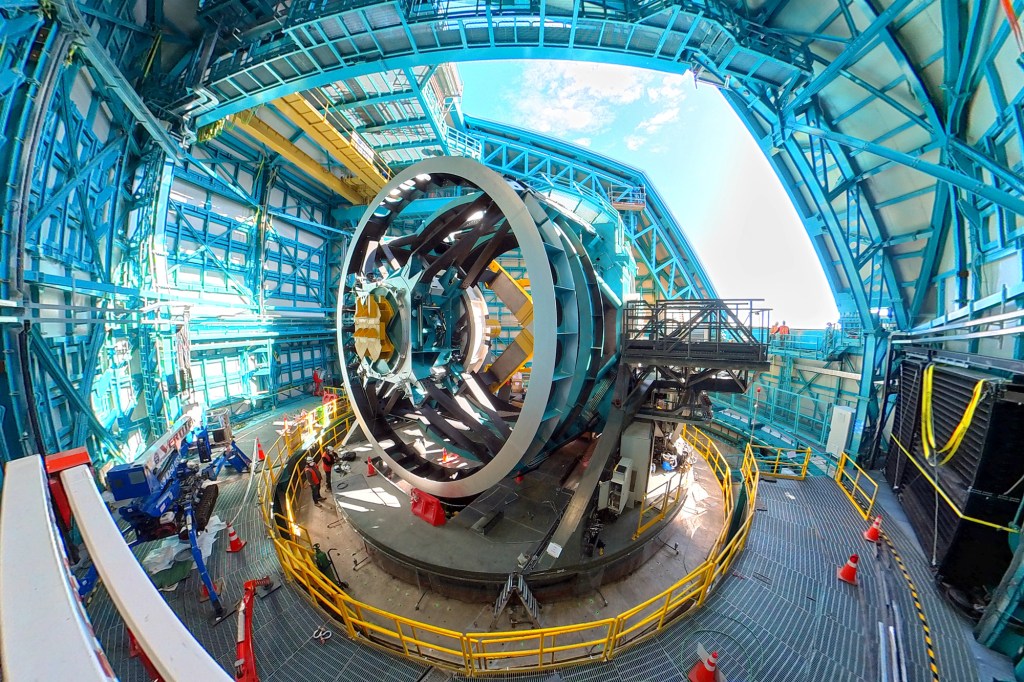
However, on a value basis I may have an argument. Dollars per unit of clear aperture I would be a clear victor, even with VCR’s massive primary objective, it’s just not on the order of 275000x larger. That comparison doesn’t feel fair though, since a square unit of aperture on a fully staffed mountaintop observatory in the Chilean desert is much more valuable than a square unit stored in my closet. Cloudy nights and weeknights are both factors I have to contend with when planning out an astrophotography session. Whereas VCR will be constantly scanning the entire night sky, over and over for every one of it’s plentiful cloudless nights. Furthermore, consideration must be made in the differences in imaging trains, I have the formidable ASI533mm pro, whereas VCR is rocking only the largest digital camera sensor ever made by humans.
So, to make this as completely fair as possible I would like to factor in the following three criteria:
- Dollars spent
- Photons collected
- Imaging circle coverage
Dollars Spent:
Clear aperture available (meter2-days per year):
| Scope | Clear Aperture (m2)3 | % Clear Nights | Weeknight Factor | Result |
| Me | 0.038 | .514 | .285 | .00552 |
| VCR | 34.3 | .745 | 1 | 25.382 |
Imaging circle coverage:
| Scope | Imaging Circle Area (m2) | Sensor Area (m2) | Imaging Circle Coverage |
| Me | 0.00045246 | 0.00012769 | .28 |
| VCR | .32177 | .32178 | 1 |
Final Tally:
| Scope | Cost ($) | Aperture/Year (m2*day/yr) | Imaging Circle Coverage (%) | ($/(m2*day)/(yr)) |
| Me | 3200 | .00552 | .28 | $2,070,393 |
| VCR | 810000000 | 25.382 | 1 | $31,912,378 |
I win.
Every day of 1-meter clear-aperture-adjusted-for-sensor-coverage-imaging per year only costs me $2M, 15x less than the VCR, should’ve looked on Facebook marketplace.
If I were to recalculate, I would factor in the fact that I don’t use my telescope every single clear weekend night. Tech issues also arise with my setup that I don’t think VCR struggles from. I would also be curious to compare quantum efficiencies of the CCD in VCR vs the CMOS in my camera. My setup is in RBG visible spectrum mono, compared to some complex spectrum breakdown for VCR, and I am pretty sure my camera covers less of the EM spectrum, so maybe that should be factored in for collecting less photons.
- my best recollection ↩︎
- https://spacenews.com/first-rubin-observatory-images-released-amid-concerns-about-budget-cuts/ ↩︎
- (outer diameter area – central obstruction area), from wikipedia ↩︎
- https://www.currentresults.com/Weather/US/cloud-fog-city-annual.php ↩︎
- https://rubinobservatory.org/explore/how-rubin-works/numbers ↩︎
- https://www.astroshop.eu/flatteners-correctors-reducers/celestron-reducer-0-63x-corrector/p,8196#specifications ↩︎
- https://www6.slac.stanford.edu/lsst ↩︎
- the sensor covers basically the entire imaging circle ↩︎
 Tom’s Site
Leave a comment